Tuesday, September 18, 2012

Post 1: Gazes

              The idea of the male gaze defines the roles of the subject in a work of art or any form of visual media and it's viewer or audience. That is, according to John Berger, "the surveyor and the surveyed" (Berger, 46). The theory of the male gaze stipulates that the viewer is always male, more precisely of European or white decent. It is for this reason, I believe, that women's role in western art has been neglected. Since everything was made for a man to see and enjoy, women's interests and concerns were never taken into consideration. In terms of the woman's role in art, it is simply to appease the viewer, the man. She does so in the nude. It is for him and only him that she is nude. As Berger writes, "Women are there to feed an appetite, not to have any of their own" (55). This appetite is quite obviously sexual. The woman must submit to the man's desires and never her own. Below is a work by Titian that clearly demonstrates this idea. Venus is spread out before the viewer making herself available. She also has a suggestive look about her, particularly her face. It practically shouts at the male saying "Here I am."


              One probable reason for the wide spread of the male gaze comes from the story of Adam and Eve in the Judeo-Christian book of Genesis. In it, Eve is blamed for eating the the forbidden fruit first and therefore, it is implied that man is superior to women. This idea of men over women is amplified because of it was declared buy God.
            A poignant sign that the gaze is still around can be be seen in today's advertising. In this day and age, we are constantly bombarded with advertisements that promise us happiness if we buy a certain product. From TV, billboards, radio commercials, all the way to the internet, we are constantly reminded of our imperfections. The one thing that is very striking about almost all ads is that they all contain one thing in common. That thing, or rather person, is a an above average looking female, preferably blond with breasts the size of her head and with as little cloths on as legally allowed. Just take a look at this ad by Dior.


           Now let's be honest, how many bombshells like her do we see every day? Not many right? In fact, have you ever seen someone so perfect? Of course not, no amount of cosmetics can give you what a professional in Photoshop can. So what is the point of creating this ad? Ads purposely use these altered images of attractive women to degrade the average woman into buying products to make themselves feel better. This image of what's desirable is perpetuated by how men have viewed women for centuries. This also goes back to the idea that women constantly watch themselves, as proposed by Berger. He states that,"She [the woman] has to survey everything she is and everything she does because how she appears to to others,and ultimately how she appears to men is of crucial importance" (46). Due to ads like these, women are always second-guessing themselves. This reminds me of the conversation we had on cat calls in class. One could think of ads as cat calls for women. Of course they are two completely different things but they achieve the same end. That is, it forces women to look at themselves.

              Now that we recognize the existence of male gaze in our society, surely there is something that counteracts it, something that opposes it. This oppositional gaze serves as a rebellion towards the patriarchy formed by the male gaze. That is, with the white male being at the very top of the peeking order and black women at the bottom. The origin of the oppositional gaze goes back to the time of slavery. As if being black weren't bad enough, being a woman was a whole lot worse. Back then, women of color were labeled as "mammies" and were often portrayed as large, working machines that took care of most of the housework and nagged, a lot. Bell Hooks touches on how the big screen painted black women in a negative light. In her book she describes the character "Sapphire" from the show Amos 'n' Andy as a "castrating bitch, as someone to be lied to, someone to be tricked, someone the white and black audience could hate. Scapegoated on all sides. She was not us" (Hooks, 120). Drawing from my own experience as a child, I remember a very similar character in the animated cartoon Tom and Jerry as seen below.


             After realizing the male and oppositional gazes exist it's hard not to notice them in everything you watch. Especially in big production Hollywood movies like Transformers where actors like Megan Fox are thrown in just to give a guy a stiffy. I distinctly remember a scene in the second film where the characters are running away from danger and the camara slows down like some scene out of Baywatch. It is evident that society also recognizes these injustices. Very recently, a female friend of mine showed me a youtube video in where a women describes the best way to get ready for a date while humorously pointing out the flaws in this process. Youtube link


Works Cited   

Berger, John. Ways of Seeing. London, England 1972. print

Hooks, Bell. Black Looks; Race and Representation. Boston Massachusetts:
      South End Press, 1992. print


     The male gaze is a term in art that can be described as looking upon a work of art through a mans eyes, preferably nudes. Take for example a painting of a nude woman and her presumed lover. The woman would be painted completely nude and her so called lover may be completely dressed. The males attention in the painting is solely fixed upon the woman while the woman's attention is fixed on the viewer of the work of art who is presumably a man. The woman's true lover is the owner of the work of art not the man painted within. The woman in the painting is completely aware of the owners gaze, the male gaze. She stares at you the viewer as if she knows you are watching her.
     The male gaze is pervasive in many ways labeling women as only objects of male pleasure. Men watch and women are watched is sexist and still exist today because the man is more than not always considerwed the one watching. This way of thinking is demeaning to women as it places them below men making their only purpose that of pleasing men through sexual inuendo.
     The women painted within the paintings were painted with mirrors looking at themselves for a sense of vanity and to take away the guilt from the male viewer. In Ways of Seeing John Berger says " Men look at women, women watch themselves being looked at" (Berger) A women is constantly looking at herself for the sole purpose of looking appealing to a man. In today's society women wear very revealing clothes and lots of make up to please who? Most women wear revealing clothes and make up to seem more pretty for men  maybe more than for themselves.There may be instances where a woman is completely aware of the male gaze and does things that welcomes it. Media today is still guilty of using women to sell things to men. Women are used to sell beer, cars, cigarettes and many other things that appeal to men. So seldom there are ads using men to sell something to women. Usually when the media wants to sell to women they use other women because women relate to other women and women's problems. Take this ad from 1975 on Tampons.
     The oppositional gaze is different from the male gaze as the oppositional gaze refers to the gaze of the black female spectator. Bell Hooks refers to the oppositional gaze as "an overwhelming longing to look, a rebellious". (Hooks) It was a crime for a black man to look at a white woman because it was seen as the black man wanting what the white man had. Many black men were killed for looking at white women so to gaze upon anything that a white owned was not an option to blacks.
     With media and television came a way for black people to gaze upon a white persons lifestyle or possessions. Black women's images within the media and on television where to make the black man feel better about himself or to be the servant of a white woman. The oppositional gaze started from the black woman's refusal to identify with the media and image of the black woman. The oppositional gaze is the defiant stare at the things the African American was told not to look at. 

Works cited.
John Berger, Ways of Seeing, web documentary,http://www.youtube.com/watch?v=u72AIab-Gdc&feature=related

bell hooks: The Oppositional Gaze: Black female Spectators', in Thornham, S (1999) Edinburgh University Press. 

http://tappingsource.wordpress.com/2011/05/17/nudity-in-context-the-female-form-in-contemporary-art/
http://pzrservices.typepad.com/vintageadvertising/vintage_feminine_hygiene_product_advertising/page/3/

"WAYS OF SEEING"


                                                                     "Goddess Rules"
                                                                          by Wak
            
If a man  is looking at a woman who is clothed or  nude, then one could say it is the presence of the "Male Gaze." As this  black female is being watched by her male spectators for their enjoyment. This painting is pervasive in how men look at  a woman with a one sided view of  sexism and objectivity and the hands are pointed up towards her as to imply, she was created just for man.

                            
                                                                      A VIDEO VIXEN                         
               
  This image is a powerful example of the "male gaze" where a woman is looking back at the camera as she is the symbol of  mysogony, sexsism and she knows she is desired. According to Berger  "Those seen beautiful are given a prize to be owned and available." She is on display to appeal to the spectators sexuality, Berger says "the male gaze has reprecussions in society." This open display to the spectator is demeaning and degrading to women just for the pleasure of the male viewer.


What is the "Male Gaze"? According to bell hooks it is confrontational, authoritative and political. It is also dangerous(115) because there is a certain power that when the male looks, he holds this power  over a woman. It is a strategy of domination males possess of females as an apparatus and mechanisms of control. It is a power system that does not give room for freedom(116).   hook says  "Women learn to have a rebellious and  opposing gaze to look a certain way in order to resist the "male gaze"(116).

There are various ways of seeing and to think about art.  It can be subjectivity and how identity is constructed within representation(131).  Racism and sexism dictates spectatorship in terms of what we look at and who we identify within art, film, television, etc.

hooks says in her  video on "cultural criticism"  that  in popular culture is "all representation motivated by power, can be a way to empower" and it is important that we not accept anything just for face value.  It is of a political world we all frame our lives in relationships to.  Sexism and feminist capitalism is constantly being perpetuated in every media of art just to make a profit.  hooks also says it is important to understand "Patriarchy" as whites males dominating women in art and media in general as men put these images of women in forms of violence and sexism.  It is a value system that puts men in a position of superiority over women.  We see images of women in art, film and television in demeaning, exploited and sexually objectified all over the world.

"Popular Culture" is where the learning takes place" says hooks in the  video "cultural criticism."
It shapes our thinking and the way we see the world.  Art  teaches us the world views and values of others.  Power relations and the mis-representation of blacks has always been historically visible because of the patriarchal systems throughout our society.  Popular culture for hooks also means that being part of an education system that replicates and emulates power figures and is how society learns certain social behaviors and practices.

The black community has no  sense of agency because they are not of a privileged race, so they do not have a the ability to have representation of an economic, political power.  Therefore, whatever is shown about blacks on the television or in film is usually negative and what the world perceives as real and true.

For example; in the movie "Smoke" the Asian director chose to make the thief a black male because that is how blacks are depicted in most films and the first to die.  It is the capitalists greed that drives them to make these images that under represent an entire race.

How I see myself, is more important than how the world sees me. As media and technology evolves,  I am optimistic that more positive representation will be shown by the ruling class system and the hands that have the power relations to tell the discourses of blacks  and others on an equal playing level and with dignity.


bell hooks. In Black Looks: Race and Representation. Boston: (1992) South End Press 115-31
                 The Oppositional Gaze: Black Female Spectators

http://www.bing.com/images/search?q=African+American+art&Form=R5FD9
http://www.youtube.com/watch?v=zQUuHFKP-9s

http://www.bing.com/images/search?q=pics+of+black+art&qs=n&form=QBIR&pq=pics+of+black+art&sc=0-0&sp=-1&sk=

Power of Looking

Stanford Prison Experiment


Looking has power. The ability to look or to stop someone from looking is control. You can see this everywhere. For example, use of the aviator sunglasses by the"police" in the Stanford Prison experiment so that the "prisoners" could not see their eyes. The sunglasses allowed them to look into the eyes of the people who they dominated and eliminated accidental relinquishing by covering up their own eyes. Looking is a way that people learn. Taking away the ability to see or creating limits on what the person can is a way of manipulating that person's view on life.

The male gaze dominates our culture. Its domination is appearent in all aspects of media; magazines, movies, and billboards are just a few of the ways that the male gaze has monopolized communication. It echos relentlessly so that not a peep can be heard from the perspective of women leaving them in silence. It is a way of seeing the world through the eyes of man and making it the norm. As described by John Berger in his essay, "Ways of Seeing, it has created a world where women must always watch herself being watched. She must adjust who she is and what she does in order to satisfy a spectator who is male. Women are seen as passive, exhibiting minimal action, becoming an object or trophy instead of a being. It is men that act and so the audience is presupposed to be a man.

This can be seen in the way that a woman dresses. The way that she dresses and how she presents herself is to cause a reaction by men. Not all women are models but they all walk a runway. As Berger says, "Men survey women before treating them. Consequently how a woman appears to a man can determine how she will be treated. To acquire some control over this process, women must contain it and interiorize it" (Berger 46). I guess it is not a surprise that most designers are men; it is a sure way to satisfy the need to get the approval of the male gaze. The male gaze brings with it a set of norms that a woman must follow if she wishes to be treated positively. Around there are constant reminders of the look to strive for. It is not only the way that other women appear but also the glances that judge the way a women looks. Every woman thinks about the way that she looks when she goes out because the way that she presents herself is always seen an external representation of what is within.


Sapphire Stevens
The oppositional gaze is a rebellion against the male gaze which is white. It is a negative reaction to the suppression of mainly black women who are portrayed negatively in the media that puts black women at the bottom because of a combination of being a women and being black. It exist because when looking at the representations of themselves in movies there is a reaction. Although some will not bring it beyond criticism there are a few who will use it to try to challenge the male gaze. As Bell Hooks describes most black women are considered "Sapphires" because there is a need to gain white male acceptance by black males.

Both women and blacks have had a struggle because they are considered inferior to the white male. When there are movements to change the way they are treated it is always a white female as leader for women's rights or a black male as the "brain" of the operation. This makes me think of the fact that when thinking about a serial killer most people envision a white male but never a woman or someone black and most definitely not a combination of the two. Yet when thinking about a prostitute it is always a women and when thinking about a drug dealer it is always a black male. It is because the level of intelligence associated with the different criminals. A serial killer is seen as someone who plans out their every movement and has reasoning for every action they make and rarely gets caught. A prostitute or drug dealer is not seen as someone who thinks out what they are going to do and so get caught often. The jails of course are always thought of as full of these lower class criminals with very few of the white male serial killers.

Once you are consciously aware of a male gaze and of oppositional gaze what do you do? You still have to live in a world where the male gaze dominates. Changing that way that the world sees women as a spectator is not an easy task especially when you start seeing every little example of male gaze as you go through your day. I think it is important not to view women as a victim of men because it would give power to the idea that women are passive and that men act. It is important not to allow men to where the aviator sun glasses.


Berger, John. Ways of Seeing. London, England, 1972.
Hooks, Bell. In Black Looks; Race and Representation. Boston Massachusetts:
      South End Press, 1992.

The Deadly Gazes


Roles for men and women have always been the same: Men hunt, work, provide for the family through physical labor and could indulge in any hobbies they liked that didn’t involve anything “feminine”. Women cook, clean, buy what was needed for the house and stay home to take care of the children and weren’t allowed to do anything else. Any alternatives would be considered a sin and would be punishable by law. Despite the roles, the laws were stricter for women than with men (with the exception of cheating with another man’s wife or being a pederast). It applies not only to the laws but to the art world as well.
The male gaze is described all in its name. The visual hierarchy that the male gaze plays is only intended for men, not women. The reason for that is because depending on the paintings, the nude inside the artwork shows a man and a woman. However, the woman is always the main focus of the painting. It creates something that only men can appreciate and that is the beauty in the disguise the woman wears. Women weren’t allowed to understand the nude because they weren’t the intentional target. The spectator (the man that buys the painting) is the main target audience in a nude painting.
Just look at the painting by Hans Memling:


It clearly shows that the look she gave the artist was meant to target the spectator for him to enjoy when he owns it. The mirror place in her hand symbolizes the word “Vanity” (a great name for the painting). The reason is because she is able to see her naked body and see herself so the artist doesn’t feel guilty of painting her and she becomes more than a naked woman. She is displaced as a person and is seen as an object and so she becomes the nude. That is the true intention of the mirror. “The real function of the mirror was otherwise. It was to make the woman connive in treating herself as, first and foremost, a sight.”
              Racism has exists to solely separate those we don’t fully understand, whether it be their culture, the color of their skin, or their nature. As I mentioned before, women were put on the lowest level of society whether it be in art, society and in the media. The oppositional gaze is what centuries of racism and sexism have created for African American women. Due to the amount of “Blackface” and the superiority complex that man put in movies, the oppositional gaze is what women see when they see movies that portray whites as the main characters or above the black and women actors(if they were in them at all) in movies. “By courageously looking we defiantly declared: Not only will I stare. I want my look to change reality.”
Men have always been classified as superior to women since the beginning of human history. I believe the bible has played a big part in placing these “guidelines” for dividing men and women. This book has been around for such a long time that no matter how you interpreted it, the roles for men and women were always the same, despite the several translations. So maybe now that society has been pushed away from such social norms, maybe we can progress and create a world where equality IS normal.
Works Cited
     Ways of Seeing. London, England. 1972.
     In Black Looks: Race Representation. Boston, Massachusetts: South End Press. 1992.

The Male Gaze and Oppositional Gaze


The male gaze is viewing art from a man’s point of view. Specifically, it is comprised of how men view women in art. The male gaze also emphasizes the  “man’s presence [that] is dependent upon the premise of power which he embodies. The promised power may be moral, physical, temperamental, economic, social, [or] sexual” (Berger 45). In order to portray a man’s exterior power, John Berger analyzes women mostly as nude, as seen by the spectator. The spectator, who is usually a man, is geared to see a woman in art as an object that he owns. Berger also uses an array of themes to characterize and objectify women. One of the themes he discussing in detail, is the vanity of a woman. When a woman is painted with a mirror in her hand, it is “a symbol of the vanity of the woman” (Berger 50). However this judgment is extremely hypocritical. According to Berger, “it is morally condemning” to call a woman vain for how the artist chose to depict her in a way that he enjoyed looking at her (Berger 50). Firstly, the nudity is depicted for the artist’s own pleasure and in order to justify his desires, he puts the blame on the woman in the painting, and degrades her character. It should also be noted that although the mirror is present, the woman in the picture continues to look outward, and not at herself. Thus she is still appealing to the spectator, and is therefore being submissive as well. 

                                                        Vanity by Memling

Another aspect that Burger emphasizes is the correlation between competition and beauty. In this painting the man is rewarding the woman he sees as being the most beautiful or attractive one present. Thus beauty becomes competitive, and those who are judged as the most beautiful “from the man’s perspective” are given a prize. According to Berger, “how a woman appears to a man can determine how she will be treated”(Berger 46). Additionally, once the woman is deemed most beautiful she becomes the prize of the judge, and becomes available for the man who gave her preference. The analysis here alludes to the fact that a woman’s success is based on male perception, and men determine whether or not women are fit to receive a “prize” although in the end it is done for selfish motives. On the contrast, the women who are not awarded a prize are not seen as beautiful, and are not appealing to the judge or the man in power. 


                                                       The Judgment of Paris by Rubens

       The male gaze is pervasive in modern day media, in fashion advertisements primarily as well. In this Gucci Guilty advertisement, it portrays Berger’s concept of how the woman continues to look to the spectator, although there is a man by her side. She is directed to appeal to the spectator and therefore is looking away from the man, and directly at the audience. Also, the woman is shown to maintain the relationship of appeal and seduction with the spectator. Firstly, her charming expression is directed towards “the man whom she imagines looking at her-although she doesn’t know him, she is offering up her femininity”(Berger 55).  She is strictly portrayed to appeal to the surveyor and is presented in a seductive way. According to Berger when there is a man pictured with a woman, “the woman’s attention is very rarely directed towards him. Often she looks away from him or she looks out of the picture towards the one considers himself her true lover-the spectator-owner”(Berger 56). Therefore, even in modern day illustrations, the relationship between the woman in art and the male “spectator-owner” still upholds.

                                                                            Gucci Guilty featured in Elle Magazine

Bell Hooks presents the oppositional gaze as “an overwhelming longing to look, a rebellious desire” that had overcome African American women (Hooks116). It was more powerful than simply looking; it was a force within that urged them to change their reality. The oppositional gaze was a form of retaliation to the male gaze. It is symbolic because it represents women resisting suppression and dominance of male figures. Hooks states that “the extent to which black women feel devalued, objectified, dehumanized in this society determines the scope and texture of their looking relations. Those black women whose identities were constructed in resistance, by practices that oppose the dominant order, were most inclined to develop the oppositional gaze” (Hooks 127). This led to the development of the gaze and how it changed how women saw themselves. 

Hooks points out that the oppositional gaze has developed through film and media. She also points out how black women feel as the spectators “we are afraid to talk about ourselves as spectators because we have been so abused by the gaze”(Hooks125). Although at first there was some skepticism from the women to stand up to their pressures, with time they were able to develop the strength to oppose the domineering forces in their life. Similarly in the film The Help, relationships are shown between white and black women that show white women as being superior and black women as being housekeepers and caretakers for their children. As Bell Hooks mentioned “black women have been mothers without children [known as] Mammies” (Hooks119). This film is centered on the hardships of the lives of these black women who work in the homes of predominantly white-dominated areas. The lack of respect given to these women is what pushes them to stand up to their “superiors” and demand a respectable position in society. 

                    The Help (Author: Kathryn Stockett) (Director of Film: Tate Taylor)

In several examples of media and art, women are objectified or shown with less clothing.  This is prominent in apparel- advertisements, television, and print media. For example, seeing women in Victoria Secret catalogs dressed with lingerie just seemed like a display for the merchandise. Women have been objectified and used as “ mere appearances” to appeal to their spectators. This is also a reflection of our culture in society. Although the form of portrayal has been advanced, the ideas of women being objectified and being portrayed in forms of seduction, is still present. I have also taken more notice of  “outward looking” of a woman in art, and how she is depicted to show a strong connection between herself and her spectator.  Personally, as a woman I was not receptive towards Berger’s analysis on how a woman’s success is defined by a man’s perception of her. I consider that to be morally degrading. Women should not be subjected to male judgment throughout their lives; they should embrace their individuality. 

For extended information on Bell Hooks' views, take a look at this link. This video goes in depth on the topic on racism and the struggles of African Americans. 


Works Cited: 

Berger, John. Ways of Seeing. London, England, 1972.

Hooks, Bell. In Black Looks; Race and Representation. Boston Massachusetts:
      South End Press, 1992.

Men Act, Women Appear.

The male gaze is structured as viewing women from a male perspective.  Many famous artists were male and thus painted and illustrated from a male perspective.  The women illustrated were objectified by the male painters and viewers. 

As Berger stated,
"Men act and women appear."
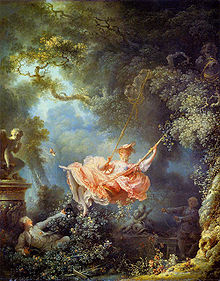
Fragonard, The Swing c. 1767
 
Women were painted to be on display for the spectator owner to enjoy.
 
Being a (white) male back in the day meant having power, that also means having authority over everything and everyone.  In our Patriartical society, even today, men are valued more than women.
"Women average less than 70 cents for eery dollar earned by men." (Guerrilla Girls 21)
Men are respected more than women. In popular culture, unfortuntely, it is the norm that it's assumed that things are viewed from a man's point of view. 


The oppositional gaze is a look that black women should not just accept the stereotypical view that they are given and should be more judgemental.  Black women were viewed as nagging women, or as "Mammies," (Bell Hooks 119)  Women are degraded as just "eye-candy," and nothing more.  An example of this is the Bechdel test where the criteria is quite simple.  To pass it has to have at least two women who talk to each other about something besides a man.  While it seems quite simple, there are very few movies that actually pass this test. This view has developed because as Bell Hooks stated,
"Not only will I stare.  I want my look to change reality."  (Bell Hooks 116)
Gazes are a very important way of communication.  It is also a way to show rebellion or resistance.  Why should black women be tied down to just a role of a nagging wife? 
"Only, the child is afraid to look. Afraid to look, but be fascinated by the gaze. There is power in looking." (Bell Hooks 115) 
Now having knowledge about the Bechdel test, it's hard to watch movies without noticing how little interaction that women have between each other without talking about another man in the movie.  This again plays into the idea of the male gaze, that a woman's view is secondary to a man's view.  Many films directors (again usually white males) cater to the idea that a male is the primary viewer and that females are secondary.  When female viewers are the main focus, the movies tend to not attract male viewers. 

I never really paid any attention towards where the female in the painting during art history class, was looking until now.  Most of the time the women were not looking at the other men in the painting but at the spectator, himself.  Knowing this now makes me feel like the women in the paintings were somehow violated by the male gaze, and to make the male artist and/or the man who commissioned the artist feel better about it, they throw in a mirror next to the female nude and call it vanity.  Since it relieves the viewer of guilt from looking at the nude, since the nude too, is looking at herself, I feel like that it is quite disgusting that they are treated like objects, like something to look at, instead of a work of art.


Works Cited

Burger, John
    Ways of Seeing. London, England. 1972.

Hooks, Bell     In Black Looks: Race Representation. Boston, Massachusetts: South End Press. 1992.